
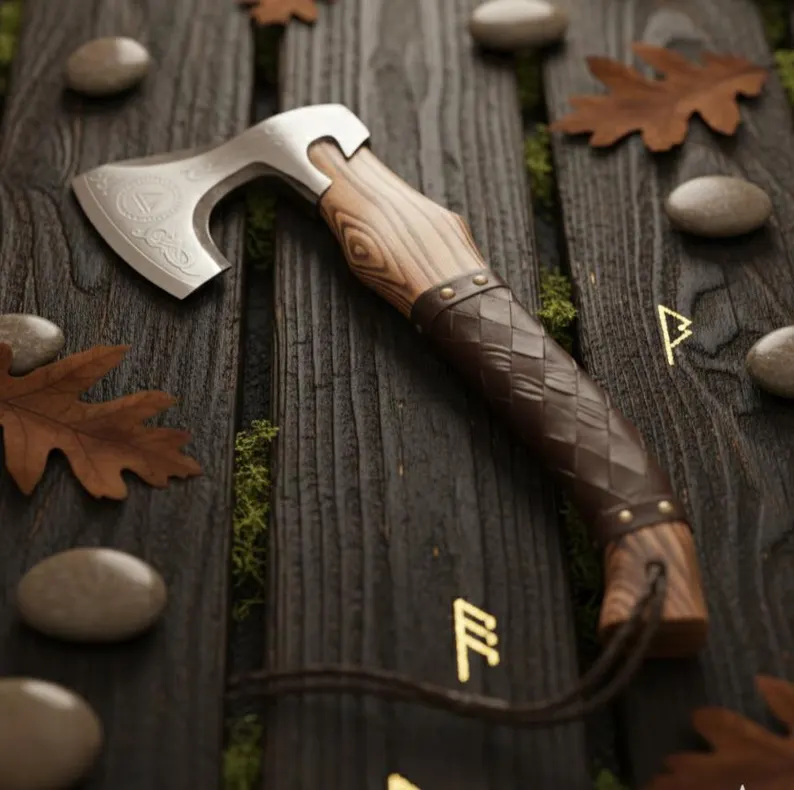
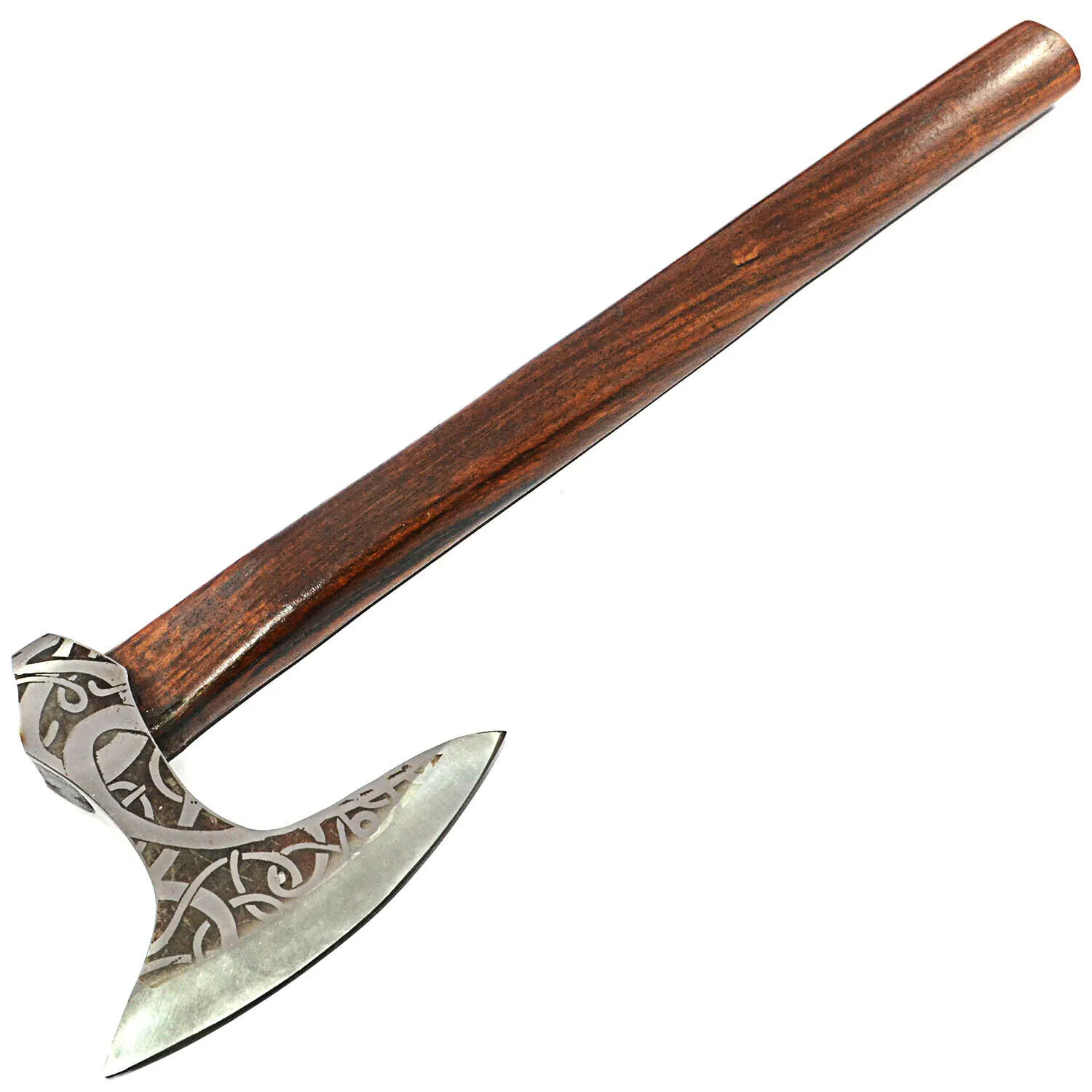
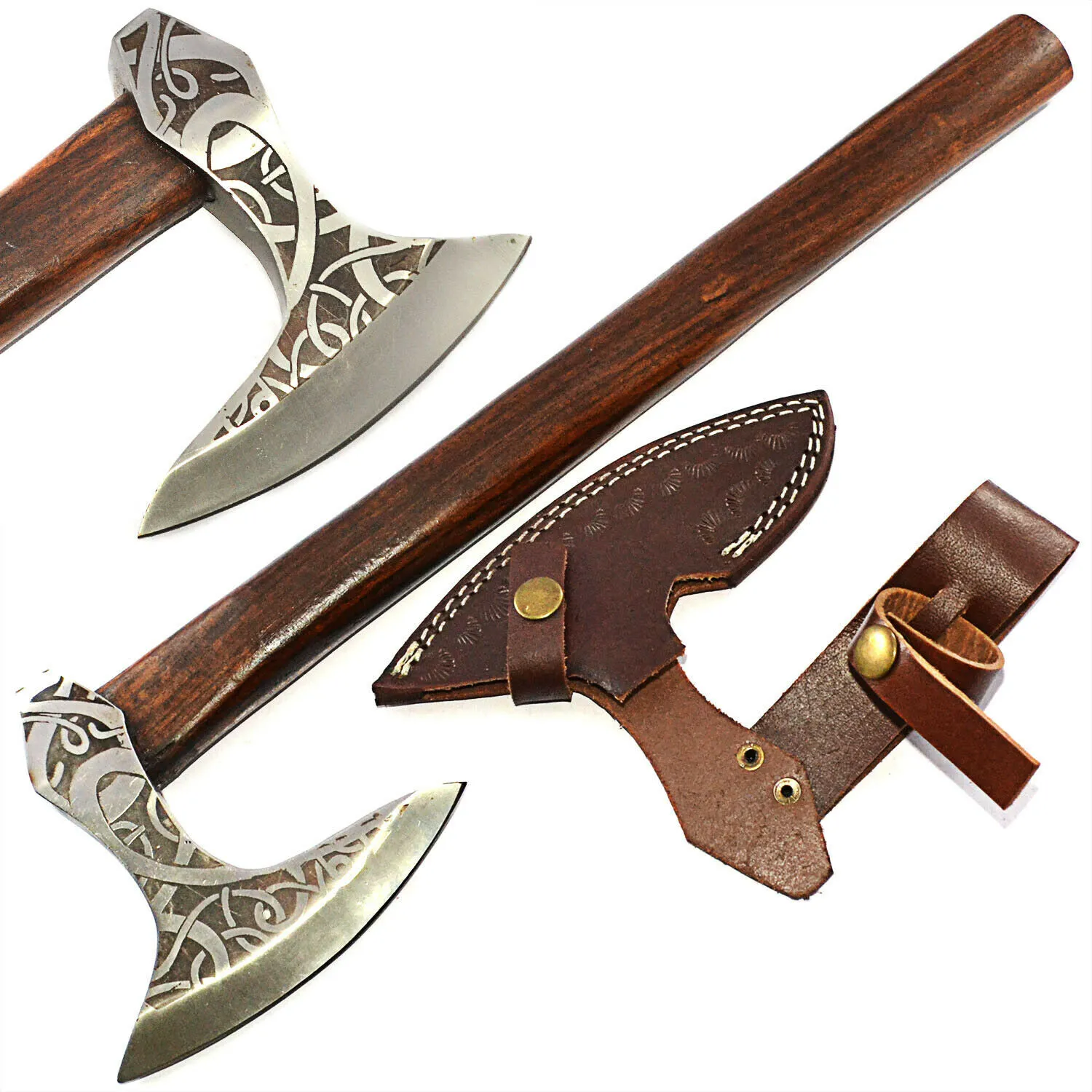
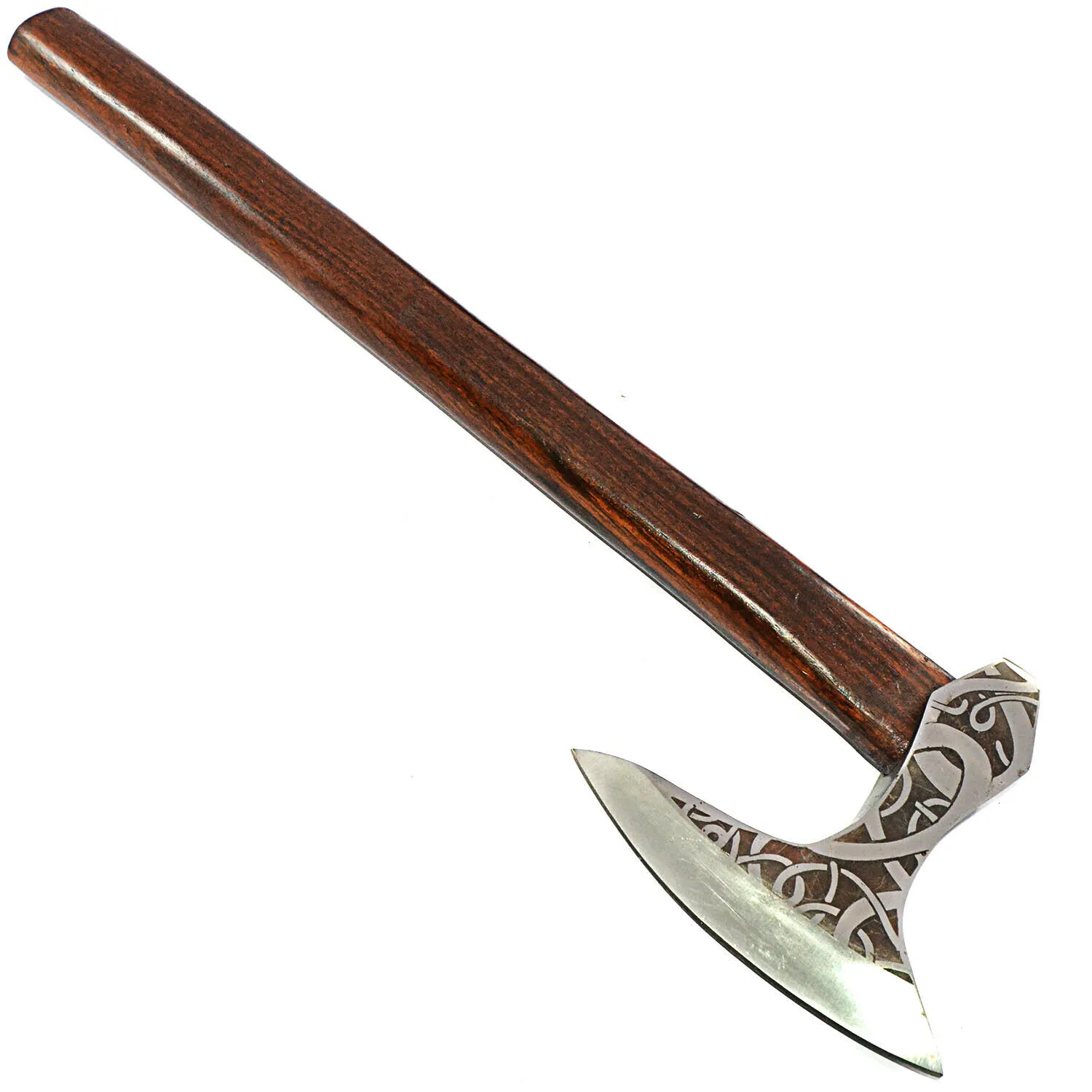
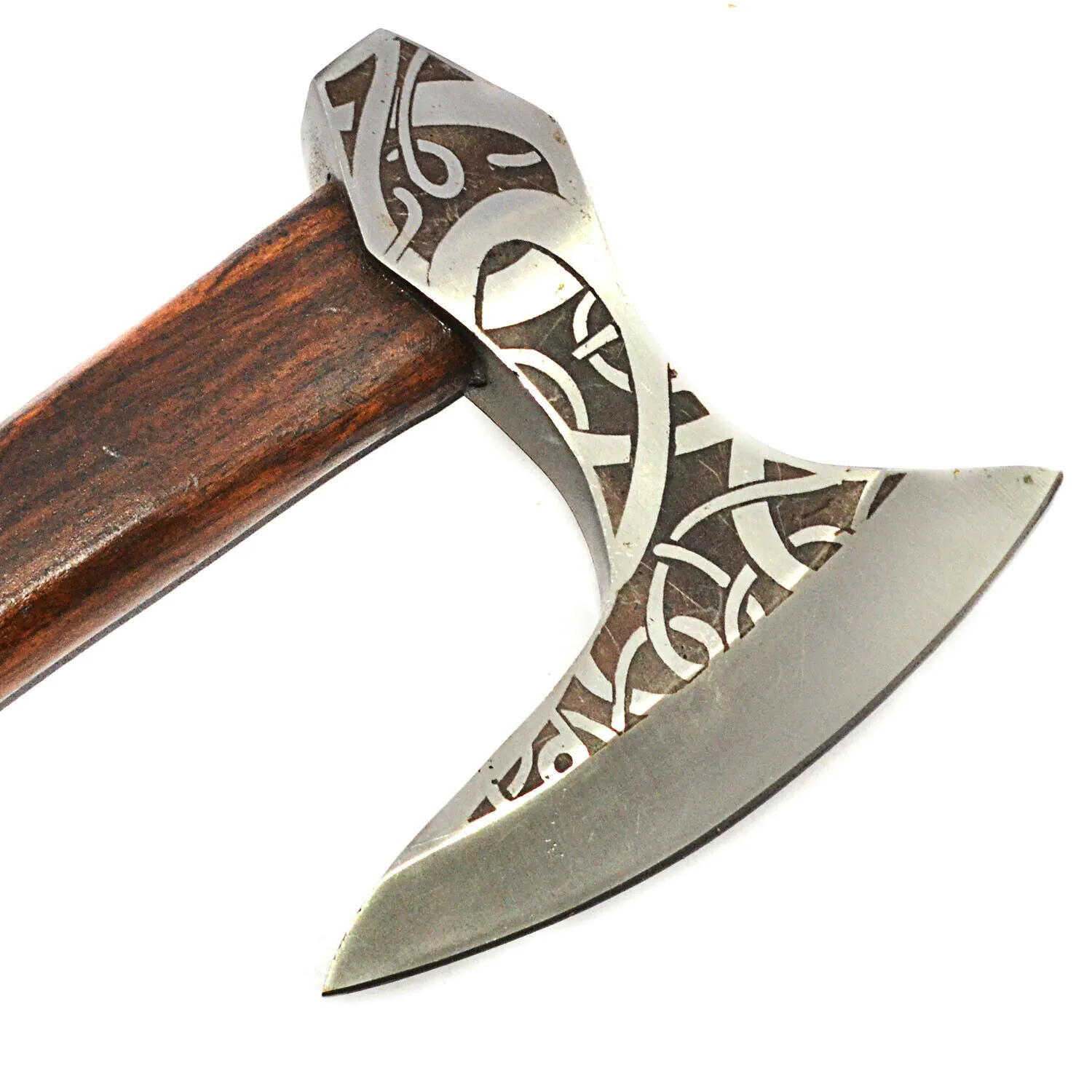
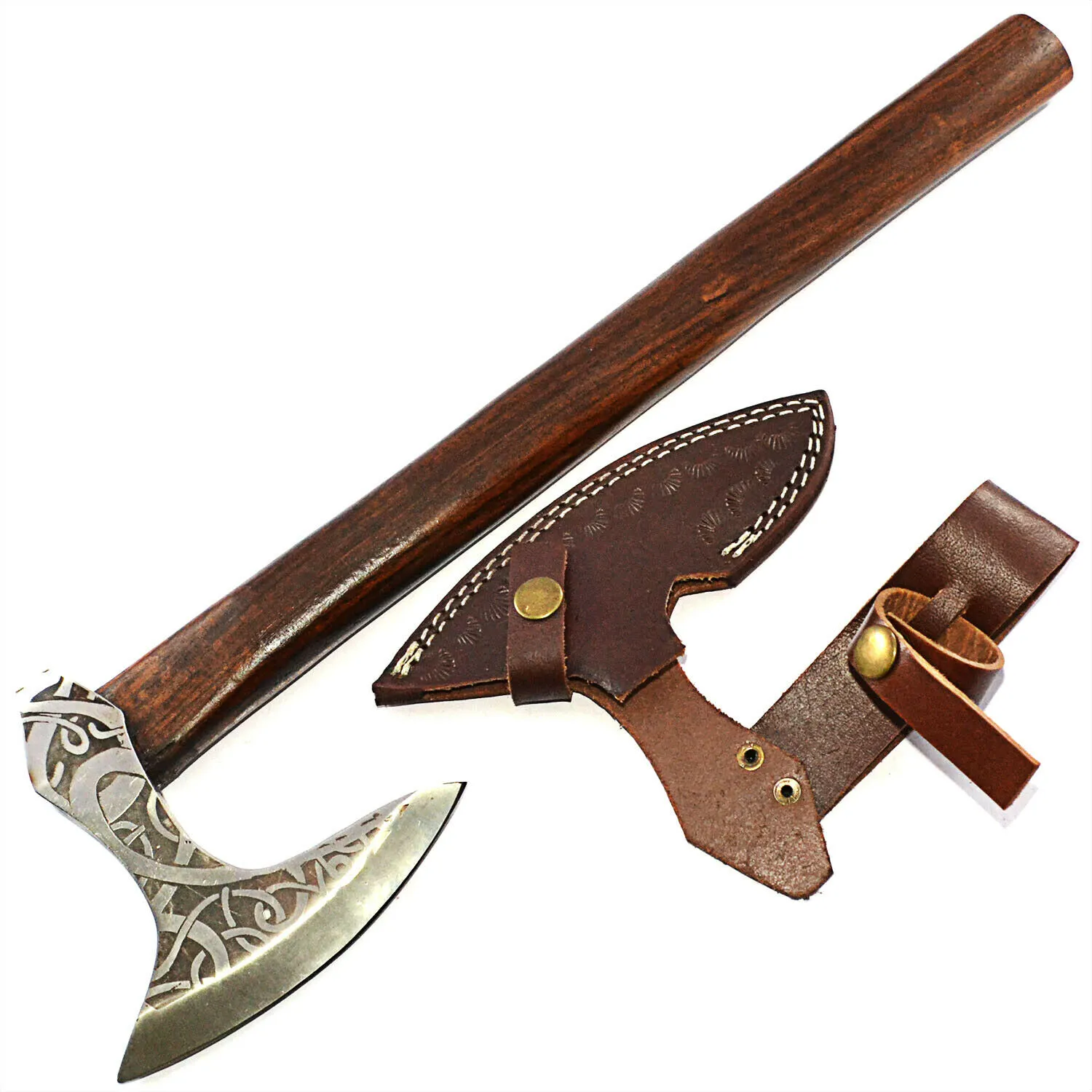
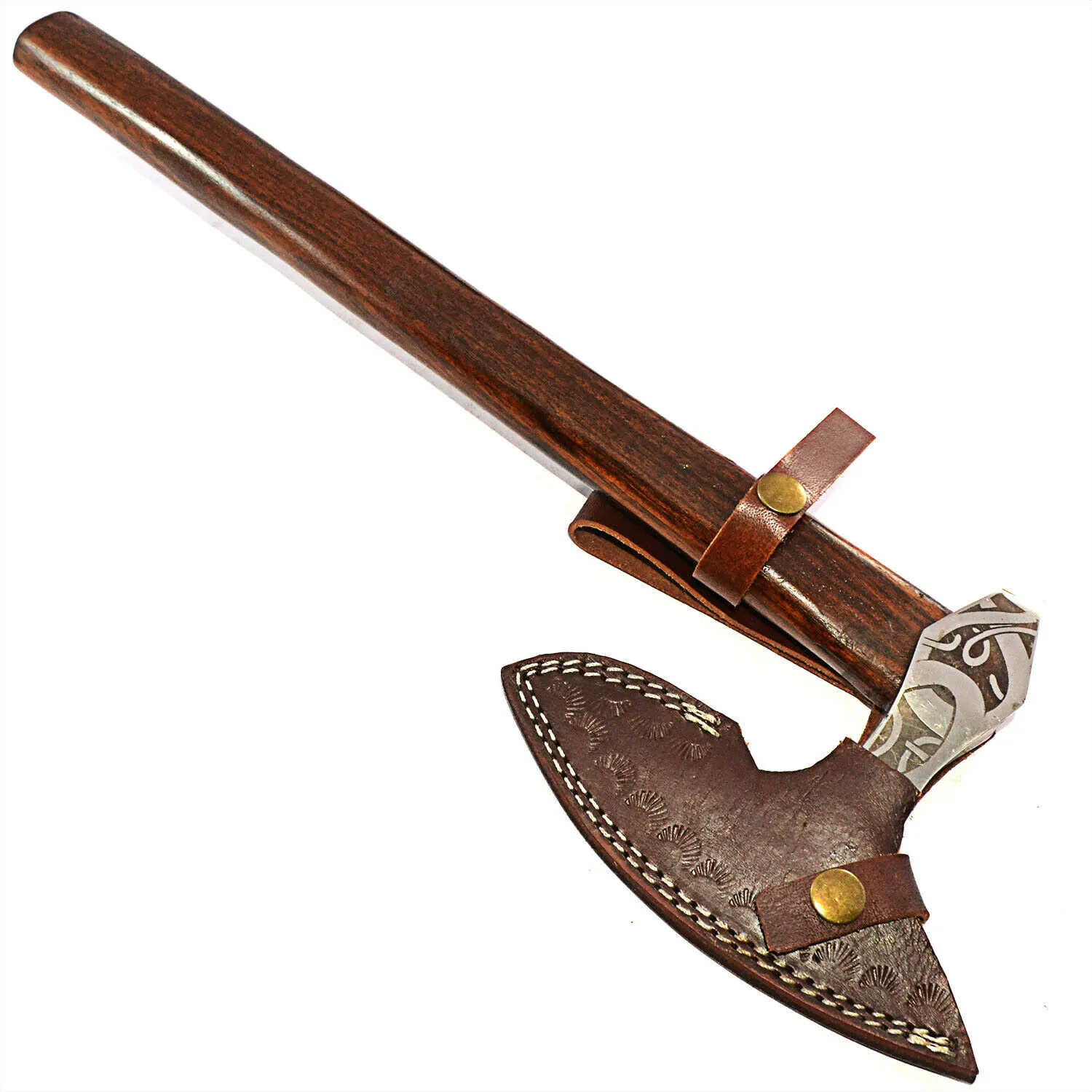
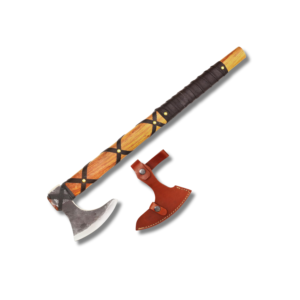
The blade features a distinct “beard” (the lower part of the bit that extends downward), which historically allowed a warrior to hook an opponent’s shield or weapon.
-
Geometry: A compact bearded profile designed for both detailed carving and aesthetic balance.
-
Engravings: Deeply etched Nordic/Celtic scrollwork on the cheeks, featuring a central circular sigil.
-
Finish: A high-polish satin finish on the primary grind and bit, contrasting with the etched artwork.
-
Cutting Edge: A slightly curved (convex) edge, optimized for clean slicing and durability.
-
Poll (Back of head): A flat, squared-off poll that provides weight balance for the bit.
Handle Specifications
The handle (haft) is the standout feature here, utilizing a multi-material “integral” look.
-
Wood Grain: Constructed from a high-contrast hardwood (likely Bocote, Zebrawood, or stained Ash) featuring prominent, wavy grain patterns.
-
Ergonomics: An aggressive recurve (pistol grip) shape for improved leverage and comfort during use.
-
Wrap: A central leather “criss-cross” or diamond-braid wrap secured by brass pins, providing a non-slip grip.
-
Reinforcement: A steel or alloy transition piece where the head meets the wood, increasing structural integrity at the highest stress point.
-
Lanyard Hole: Includes a pre-drilled hole with a leather thong for wrist security or hanging display.
Damascus Specifications
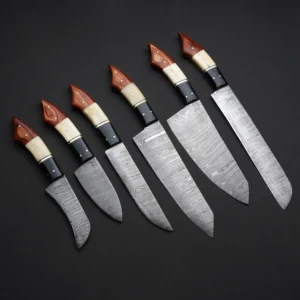
While the specific axe in the image appears to be high-carbon steel with a polished finish, many similar custom blades are forged using Damascus steel. If this were a Damascus build, it would typically follow these specs:
-
Material Composition: Forged from alternating layers of 1095 High Carbon Steel (for hardness) and 15N20 Nickel Steel (for toughness and shine).
-
Layer Count: Usually ranges between 256 and 512 layers to achieve that fine, flowing visual detail.
-
Pattern Type: Given the curves of this axe, a Twist or Ladder pattern would be most common to complement the handle’s wood grain.
-
Etching: Treated in an acid bath (Ferric Chloride) to darken the high-carbon layers, making the wavy “water-like” pattern visible.



Reviews
There are no reviews yet.