
Blade Specifications
-
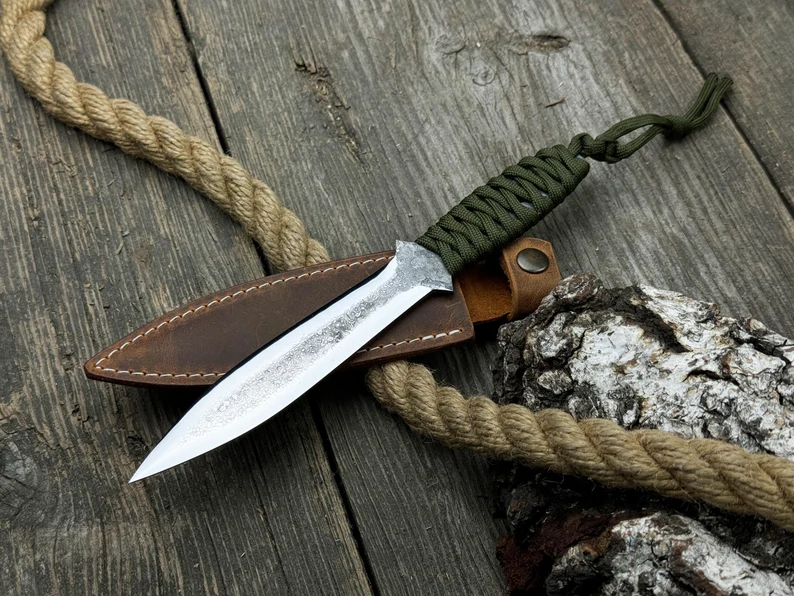
Profile: Single-edged with a thick spine (often 5mm to 8mm). The most famous variant is the “Broken-Back” Seax, where the spine runs straight and then angles sharply down to the point.
-
Edge: Usually straight or slightly curved, designed for both heavy chopping and fine utility work.
-
Tang: Traditionally a hidden tang (rat-tail style) that is inserted into a solid block of handle material.
-
Construction: Historically made from “piled” steel or pattern-welding to combine a hard steel edge with a softer, shock-absorbing iron spine.
Handle Specifications
-
Materials: Primarily organic materials available in Scandinavia, such as Birchwood, Ash, Oak, Reindeer Antler, and Bone.
-
Guard: Notably, historical Viking knives rarely had a cross-guard. The transition from blade to handle was usually flush or protected by a simple metal ferrule (bolster).
-
Fittings: High-status knives featured brass or bronze bolsters and pommel caps, often decorated with stamped geometric patterns or Norse knotwork.
-
Length: * Utility Seax: 7.5cm – 20cm (Everyday tasks)
-
Long Seax (Langseax): 40cm – 75cm (Primary weapon, similar to a short sword)
-
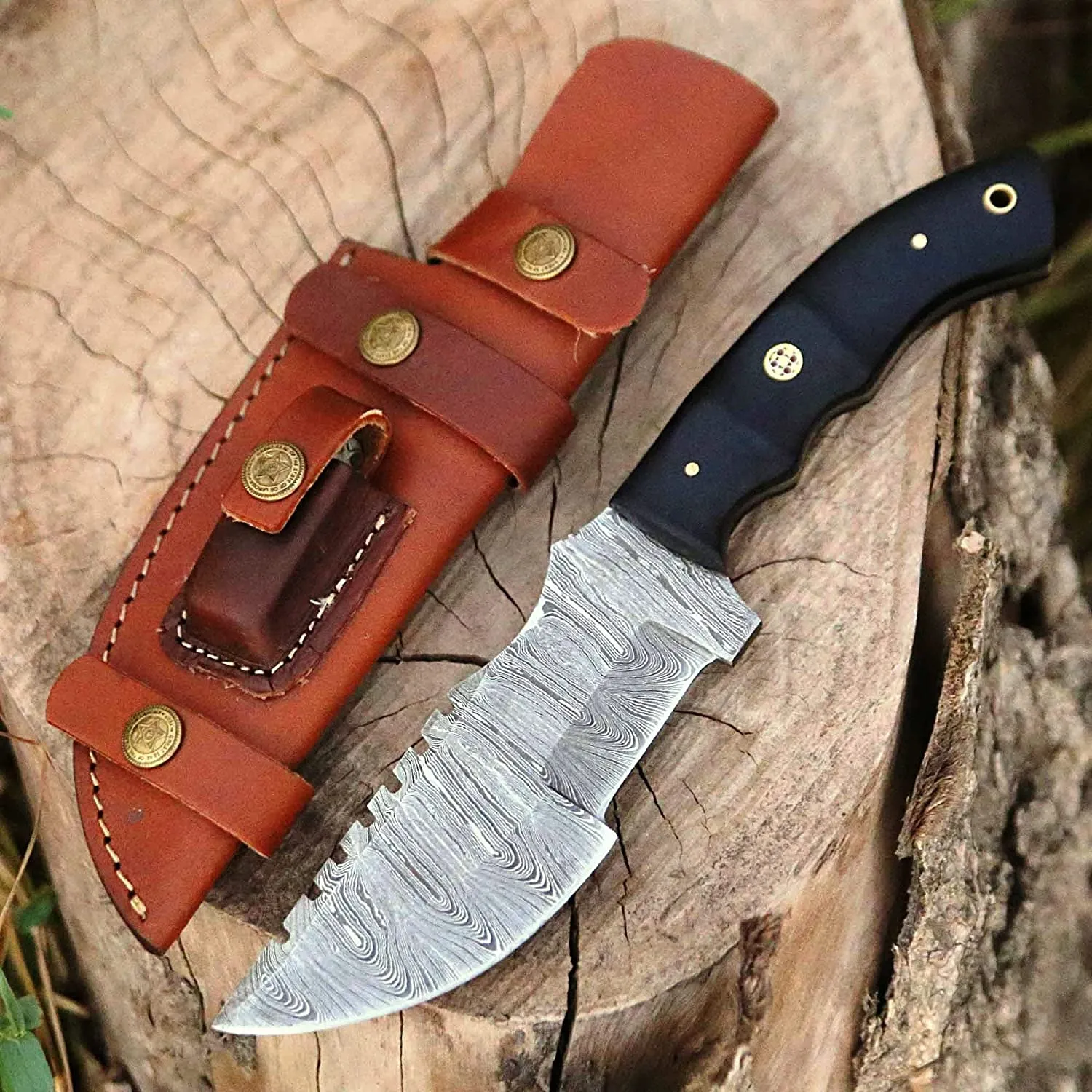
Damascus & Pattern-Welding
-
Historical Damascus: Vikings practiced pattern-welding. They would twist rods of iron and steel together to create a “herringbone” or “snake” pattern.
-
Function: This wasn’t just for looks; it was a way to homogenize the inconsistent quality of iron available at the time, making the blade much stronger than a single-material forge.
-
Symbolism: A highly patterned blade was a major status symbol, indicating the owner had the wealth to pay a master blacksmith for the hundreds of hours of labor required.


Reviews
There are no reviews yet.